Electric Actuator Strategy Helps OEMs Build Smarter, More Flexible Automation Systems
Key Highlights
- Early actuator selection influences system architecture, safety features and future scalability, especially in robotics and modular systems.
- Modularization and early decision-making reduce costly redesigns, improve safety and support business strategies like branding and time-to-market advantages.
- Using simulation tools early in design helps optimize actuator choice, balancing tradeoffs between speed, load, durability, and strategic goals.

For heavy duty, high duty cycle industrial applications such as pick-and-place, sorting, wrapping, palletizing and general material handling, actuator selection used to be relatively straightforward. OEMs could defer choosing an actuator until later in the design process because interfaces were simple, and there were few alternatives outside of the well-known hydraulic and pneumatic systems. Motion mechanism design was a core mechanical engineering discipline familiar to machine builders, and actuators were primarily a way to power a pre-designed motion architecture.
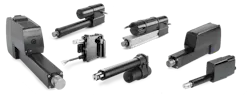
This all changed several decades ago, however, with the introduction of electric linear actuators, which have evolved to handle higher load capacities, embedded intelligence, programmability and modularity, and cleaner, more compact operation benefits that are all close to impossible to achieve with hydraulic and pneumatic cylinders. (Figure 1)
This shift in actuation preference comes at a time of increasing business volatility, when OEMs need maximum agility to scale up or down, change direction easily or reconfigure operations to take advantage of emerging opportunities. To achieve that agility, however, today’s solutions cannot be an afterthought but rather, considered as early as possible in the design process. Here are five trends that have been earning electric actuators a seat at the planning table:
- Electrification-driven performance improvements
- Robots and cobots
- Modular system architectures
- Workplace safety and regulatory
- Strategic actuation
Linear motion has a starring role in each of these trends, balancing an array of tradeoffs, such as stepper vs. servo motor, ball screw vs. lead screw, rod vs. rodless architecture and precision and speed vs. low cost and compactness. Design engineers now make these decisions in the context of an integrated, electrified platform.
Electrification Drives Performance
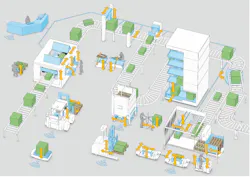
Electric actuators are no longer standalone components but systems that integrate mechanical elements, motors, drives, sensors, controllers and communications interfaces. These actuators also integrate rendering in software, a functionality that previously required external hardware. Building or selecting integrated systems early shapes the architecture of the entire machine, including control strategies, communications protocols and power requirements. (Figure 2)
The integration of electrical and electronic capabilities has significantly expanded the machine builder’s ability to deliver the high performance that today’s markets demand. As motion control technology has advanced, designers have seized the opportunity to fit more automation axes into smaller footprints. They began leveraging microprocessors and embedded controls as electric actuators evolved from simple components into intelligent subsystems. To fully leverage such capabilities for strategic advantage (e.g., reducing production cost, increasing production value, improving process efficiency), machine designers are increasingly thinking about the role of the actuator as part of a system and much earlier in the design cycle, even at the concept stage.
Modern electric actuators introduce capabilities that directly influence system architecture. It is not easy to select a motor, control strategy, safety systems, failure modes and mechanical layouts without knowing what type of actuator you will be using. But an even larger barrier to optimal performance is the growing array of electrical and electronic performance improvement technology that is not accessible from downstream in the planning process, such as:
- Sub-micron level position accuracy
- Programmable multi-position control
- Synchronized multi-axis motion
- Precise force/torque control with position awareness
- Highly repeatable motion profiles, speed and acceleration
- Sensor-driven positioning
- Backlash-free compliance positioning
Along with these performance enhancements come innovations in embedded intelligence that enable such functionality, driving a new generation of strategic motion engineering that requires consideration much earlier in machine development.
For example, an OEM replacing a hydraulic pick-and-place operation with an electric modular packaging cell must account for varying product sizes, speeds and duty cycles from the outset. Selecting an actuator that cannot support future throughput or positioning requirements may later require changes to controls, mounting configurations, power requirements and software integration. As machine complexity increases, actuator selection influences the broader system architecture, including PLC requirements, communication protocols and synchronization across multiple axes.
As always, designers study the motion profile to determine the best fit for the application, but they must now do it with an understanding of the actuator’s role in larger systems. This is only possible if actuator characteristics are known during system design. Doing so later is like jumping on the train after it has already left the station. It is possible, but it may not end well.
Rising Use of Robots and Cobots
Robots and cobots are mechatronic systems that require early selection of actuators to ensure built-in safety features and regulatory compliance. Choosing the correct actuator prevents costly redesigns and supports intelligent subsystem integration.
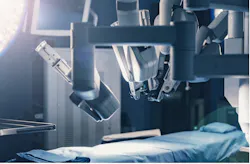
Robotic imaging systems consist of interoperable modules such as robotic arms on mobile platforms. Early motion solution decisions influence joint size, payload, power density, control architecture, structural integrity and safety requirements. (Figure 3)
Cobots rely on actuators with integrated force/torque sensing for safe human interaction and collision avoidance. In regulated industries such as pharma and medical devices, delayed actuator selection can lead to expensive revalidation processes.
The Need for Modularity and Flexibility
Modularization offers OEMs agility in today's markets by enabling systems built from pre-engineered components such as electric actuators, robots and valves with integrated intelligence and communication. The timing of actuator selection is critical for system effectiveness.
For example, an OEM standardizes a linear axis module across machines in a production cell. When higher-speed demands arise, the lead screw actuator fails to meet performance requirements due to heat, energy loss and wear. Switching to a ball screw is not feasible because of mounting incompatibilities.
This change disrupts electrical and control systems, requiring new motor sizing, feedback and tuning, potentially impacting the entire machine platform. Designers may also have to spend additional time updating documentation, BOMs and controls. The previously standard module becomes fragmented. To prevent such complications, avoid retroactive upgrades.
Workplace Efficiency and Safety
Early consideration of actuator type can impact workplace efficiency and safety. Scissor lifts, for example, have traditionally used hydraulic cylinders but, increasingly, they are incorporating elements such as embedded load sensors, real-time weight calculations, and onboard controllers with digital displays and alerts. These enhancements have opened a whole new realm of design potential under advanced electric actuator control.
Such features improve safety by reducing guesswork and helping prevent tipping events. Actuator selection directly affects the lift’s mechanical behavior. The actuator interacts with the linkage geometry, influencing stroke requirements, force multiplication and the relationship between lift height and actuator extension. Early decisions about actuator placement and orientation define how the system operates. Delaying these decisions can lead to an actuator that is oversized, undersized or poorly integrated.
Business Strategy in Motion
Choosing the motion architecture early in the design process enables a scalable product platform. An example is using the same arm across multiple imaging systems, which could impact margins enough to gain attention from the boardroom and senior management. Likewise, the OEM could bring variants to market faster. Shared components and simplified services improve margins, reuse of standard components and service revenue.
By contrast, choosing the wrong actuator or choosing it too late can lead to fragmented product lines, higher engineering costs in variations of the same product and limited ability to support future features such as AI-guided imaging and robotics.
Actuator choice can directly support business strategy, especially in premium or innovation-driven products. Even if the application specifications call for a stepper motor, the designer could choose a servo-driven ball screw because the market could perceive the smoother motion as a sign of quality and “high precision.” Whether the business strategy is to compete through branding as high precision, low cost, fastest time to market or something similar, it is the board room and senior management that sets the policy, and every level defines compliance. So, the engineering team must at least consider the strategic implications when deciding between one actuator or another, and it must do so early in the process; jumping on the strategy train too late could jeopardize multiple facets of the business plan.
Reaching a Balanced Actuator Selection
Electrification, mechatronics, modularization, safety considerations and business strategy planning are driving actuator decisions earlier in the automation design process. Although some architectures may be designed to enable actuator selection later on, best practice is to start with a tentative commitment to an actuator type and then design around that. Using linear motion selection software such as Thomson’s Linear Motioneering sizing tools helps visualize and calculate tradeoffs you might encounter in the process. Here is a common approach to balancing the timing of your actuator choice:
- Review motion profile on speed, load, stroke, durability, etc. in the context of the business strategy
- Select the actuator category
- Advance the process around the hypothetical actuator type, ideally using simulation software that will help refine the choice before committing to production
- Specify performance targets based on the capability of the chosen actuator, and adjust your choice as necessary
- Revisit the decision against the business strategy
Following this or a similar process as early as possible will help ensure that you build optimal linear motion for your application, with minimal rework and maximum strategic alignment. It may be a while before we actually see actuators in the boardroom, but certainly, digitalization is already high on the corporate agenda, and it is electric actuators that will provide the moving parts that put those plans in motion.
About the Author
Urban Violet
Urban Violet is the Strategic Marketing Manager – Americas, Linear Motion Division for Thomson.
Leaders relevant to this article: